Love Letter Cartoon Icon: A Designer's Review for Embroidery
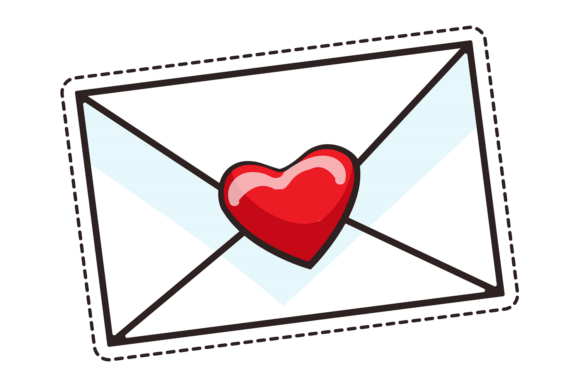
As a designer who spends more time staring at stitch previews than most people care to admit, I approach new Illustrations and Graphics with a specific set of criteria. It is not just about whether an image looks cute on a screen; it is about how that image translates into thread, how it sits on fabric, and whether it holds up under the scrutiny of a paying customer. Today, I am taking a close look at the Love Letter Cartoon Icon. Heart Envelope. This design, described as a heart envelope sticker isolated on a white background, immediately caught my eye for its potential in the realm of personalized gifts and boutique merchandise. However, before I commit this machine embroidery design to a client's project, I need to break down exactly how it performs in the real world.
First Impressions and Visual Personality
The moment you load the Love Letter Cartoon Icon. Heart Envelope into your digitizing software or view the preview, the mood is unmistakable. It radiates warmth, affection, and a touch of playful nostalgia. The concept of a heart-shaped envelope is universally understood, making it an excellent choice for communication-based themes like weddings, anniversaries, or Valentine's Day. Visually, the layout appears clean and centered, which is crucial for embroidery. Cluttered designs often turn into muddy messes once stitched, but this icon seems to rely on strong, defining shapes.
For an embroidery project, the "cartoon" aspect suggests bold lines and potentially solid areas of color rather than intricate shading. This is generally a good sign for durability. If the original file relies heavily on gradients or tiny details meant for print, those will need careful attention during the digitizing phase. The visual personality here is friendly and approachable, fitting perfectly into the current trend of whimsical, hand-drawn aesthetics that dominate small shop products on platforms like Etsy.
Real-World Application: The Custom Tote Bag Scenario
To truly evaluate this design, I imagined a specific real-life scenario: creating a custom embroidered tote bag for a local bridal shower. The bride wanted something subtle yet meaningful for her bridesmaids' gift bags. The Love Letter Cartoon Icon. Heart Envelope seemed like the perfect candidate. In this context, the design would likely be placed on the lower corner of a canvas tote.
When visualizing the finished product, the heart envelope acts as a seal of love, literally and figuratively. On a natural cotton canvas, the contrast of bright red or soft pink thread against the neutral fabric would pop beautifully. For a sweatshirt embroidery project, perhaps for a "Galentine's Day" gathering, this graphic would work well on the chest or sleeve. The simplicity of the icon ensures it doesn't get lost in the texture of fleece or French terry cloth. It is versatile enough to serve as a standalone motif or part of a larger composition involving text.
Versatility Across Different Products
Beyond tote bags and sweatshirts, this digital embroidery file has legs in several other categories. Consider baby embroidery; a onesie featuring a small version of this heart letter could signify a "love note" from parents to child. For holiday embroidery, it fits seamlessly into February collections. I can also see this working effectively as an embroidered patch. If applied to a denim jacket or a backpack, the defined edges of the envelope shape would create a crisp border, essential for patch longevity.
For Etsy sellers and creative entrepreneurs, the adaptability of this graphic is a major selling point. It can be used for custom apparel, kitchen towels, or even pillow covers. The key is recognizing that while the source files include EPS, JPG, SVG, and transparent PNG, these are primarily design assets for print or digital use. To use them for embroidery, one must ensure they are properly digitized into a machine-readable format unless a pre-digitized version is explicitly provided.
Technical Considerations and Fabric Challenges
While the aesthetic is charming, practical execution requires vigilance. When working with the Love Letter Cartoon Icon. Heart Envelope, fabric choice plays a pivotal role. On textured fabrics like waffle knit or heavy linen, fine details might get swallowed up. If the design includes thin outlines or small internal elements, a running stitch might disappear, necessitating a switch to a slightly thicker satin stitch or a light fill stitch to maintain visibility.
Stretchy fabrics present another hurdle. If you are applying this to a fitted tee or a stretchy baby garment, the stitch density becomes critical. Too dense, and the fabric will pucker around the heart shape, distorting the envelope flap. Too light, and the coverage will be poor, especially on dark fabric. Speaking of dark fabric, if you plan to stitch this on navy or black garments, you must account for the background. Since the original description mentions isolation on white, you may need to add a backing layer or adjust the thread colors to ensure the "white" parts of the envelope don't look gray or translucent.
Curved surfaces, such as caps, require extra caution. The center of a cap is a small, rounded area. Placing a wide envelope design there might cause the edges to wrap awkwardly around the curve. In such cases, scaling down the hoop size and simplifying the outer edges of the design is advisable. Additionally, for items that need frequent washing, like aprons or tea towels, securing the start and end points of the stitching is vital to prevent unraveling.
Enhancing Value and Professionalism
The ultimate goal of using high-quality Graphics like this is to elevate the perceived value of the handmade product. A crisp, well-executed Love Letter Cartoon Icon. Heart Envelope signals professionalism. It tells the customer that thought went into the design selection. This builds trust and encourages repeat business. Whether it is a personalized gift for a friend or a piece of commercial embroidery for a boutique brand, the clarity of the stitching directly impacts buyer engagement.
For those creating printable mockups to sell digital versions or preview physical goods, the SVG and transparent PNG formats mentioned in the product description are invaluable. They allow you to place the design on various backgrounds to simulate the final look without stitching a single thread. This helps in testing color combinations and placement before committing to the machine.
Practical Notes for the Embroidery Designer
Before you launch this design on a production run, here are my top recommendations for ensuring success:
- Test on Scrap Fabric: Always stitch a sample on the exact same material and weight as your final product. This reveals issues with tension and density.
- Check Thread Contrast: Ensure your thread colors stand out against the fabric. A red heart on a dark red shirt might look muddy without a contrasting outline.
- Review Stitch Density: If the design feels stiff after stitching, reduce the fill density. Flexibility is key for wearable items.
- Confirm Hoop Size: Verify that the design fits within your available hoop dimensions, especially if adding monograms or names alongside the icon.
- Inspect Small Details: Look closely at the "flap" of the envelope. Tiny corners can be tricky; ensure they are anchored well.
- Use Proper Stabilizer: Match your stabilizer to the fabric. Cut-away is usually best for stretchy knits, while tear-away works for stable wovens.
- Verify Licensing: The product description lists file formats but does not explicitly state commercial license terms. Always confirm whether you are allowed to sell finished items or if the license is for personal use only before listing products in your craft business.
In conclusion, the Love Letter Cartoon Icon. Heart Envelope is a promising asset for designers looking to add a touch of romance and whimsy to their repertoire. Its strength lies in its clear symbolism and adaptable shape. However, like any applique design or graphic conversion, its success depends entirely on the skill of the operator and the preparation of the file. By respecting the limitations of the fabric and the machine, and by treating the design with the technical care it deserves, you can transform a simple cartoon icon into a cherished keepsake.