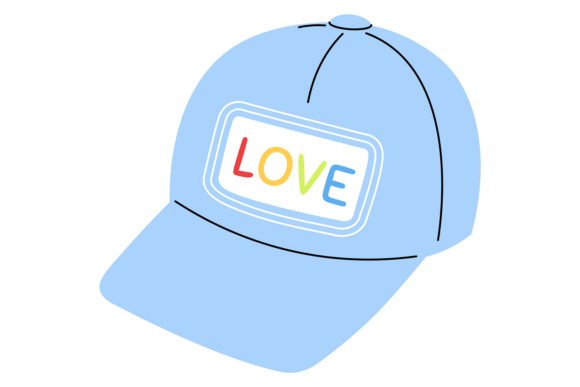
Love Diversity Cap: A Pride Fashion Review
As a designer who spends more time threading needles than browsing stock sites, I approach every new digital embroidery file with a healthy dose of skepticism. We have all been there: you download a stunning graphic, only to realize it falls apart the moment the machine tries to translate those vector lines into thread. Today, I am taking a close look at the Love Diversity Cap. Pride Parade Fashion design. While the product listing categorizes this under Illustrations and Graphics, my job is to determine if it holds up as a functional machine embroidery design for real-world applications.
The first impression of this asset is undeniably vibrant. The theme screams celebration, inclusivity, and modern streetwear aesthetics. Visually, it carries a bold personality that fits perfectly within the current trend of statement apparel. However, seeing a JPG or SVG on a screen is vastly different from watching a needle punch through fabric. The layout suggests a compact composition, likely intended for chest logos, pocket details, or, as the title implies, cap fronts. The mood is uplifting, but the critical question remains: does the detail level survive the transition from pixel to stitch?
Real-World Application: The Custom Tote Scenario
To truly evaluate this design, I imagined a specific project: a limited-run collection of canvas tote bags for a local community center's pride event. This is a classic use case for small shop products where durability and visual impact are equally important. When placing the Love Diversity Cap. Pride Parade Fashion motif onto a heavy-duty canvas, the potential is high. The strong shapes inherent in the illustration style suggest it would convert well into a combination of satin stitch borders and fill stitch interiors.
In this scenario, the design acts as a focal point. For an Etsy seller or craft business owner, the value lies in how quickly the finished product communicates its message. A customer grabbing a bag off a table needs to instantly recognize the theme. This graphic delivers that immediate recognition. If executed with high-contrast thread colors, the result would be a professional-looking handmade product that feels bespoke rather than mass-produced. It elevates a simple tote into a piece of wearable advocacy, which is exactly what buyers look for in personalized gifts or event merchandise.
Navigating Fabric Textures and Hoop Constraints
However, enthusiasm must be tempered with technical reality. Not every surface is as forgiving as flat canvas. If you plan to use this design on stretchy fabric like a jersey t-shirt or a thin baby onesie, caution is required. The original files come in formats like EPS and SVG, which are scalable, but the embroidery adaptation depends entirely on how the digitizer handles the stitch density. Dense areas can cause puckering, especially on lightweight materials. Before committing to a full production run of custom apparel, it is imperative to test the design on scrap fabric that matches your final material.
Curved surfaces present another challenge. The title mentions a "Cap," and while the design is thematically perfect for headwear, caps are notoriously difficult to embroider due to their curvature and seam structures. A standard hoop size might not accommodate the design if it is too wide, forcing you to resize it. Shrinking the design too much risks losing the integrity of small details. Tiny lettering or intricate corners in the illustration could merge into a solid blob of thread if the resolution isn't adjusted for the smaller scale. Always check the minimum recommended size before hooping up a expensive hat blank.
Visual Appeal and Brand Consistency
From a branding perspective, consistency is key. If you are building a boutique brand around inclusivity, the Love Diversity Cap. Pride Parade Fashion graphic offers a cohesive visual language. It works exceptionally well for printable mockups used in online listings, allowing customers to visualize the finished product before buying. The isolation on a white background in the source files makes it easy to composite into marketing materials.
Yet, the true test of professionalism is in the stitching clarity. Does the running stitch outline hold sharp? Do the color transitions look smooth or jagged? These factors directly influence customer trust. A sloppy execution can undermine the message of the design. For commercial embroidery projects, such as corporate orders for diversity training events, the finish must be flawless. The design's ability to maintain its shape after frequent washing is also a concern. High-density fill areas can become stiff; therefore, selecting the right stabilizer is non-negotiable. A cut-away stabilizer is often safer for stretchy garments to prevent distortion over time, while tear-away might suffice for stable fabrics like denim or twill.
Practical Notes for the Working Designer
Before you list this as a new item in your shop or stitch it onto a client's sweatshirt, here are a few practical steps to ensure success. First, verify the license. Just because a file is available as a graphic does not automatically grant rights for unlimited commercial resale of the stitched item. Always confirm the terms regarding design assets and finished goods.
- Test on Scrap: Never skip the sample stitch-out. Use the same fabric and stabilizer you intend to use for the final product.
- Check Contrast: View the design in black and white. If the elements blend together without color, the stitch definition might be too low for clear visibility.
- Inspect Density: Look for areas where stitches overlap excessively. These can cause thread breaks or needle deflection.
- Confirm Sizing: Ensure the design fits your available hoop sizes without compromising the edge details.
- Fabric Matching: Consider how the thread sheen interacts with the fabric texture. Matte threads on shiny nylon might look different than on cotton twill.
Ultimately, the Love Diversity Cap. Pride Parade Fashion design is a promising candidate for a variety of embroidery projects. Whether you are creating holiday embroidery gifts, nursery decor, or embroidered patches for jackets, the core strength of this graphic lies in its emotional resonance. It taps into a cultural moment with style and grace. However, its success relies on the skill of the operator to translate those digital Illustrations into tangible textile art. By respecting the limitations of the medium and preparing thoroughly, you can turn this digital file into a standout piece that customers will cherish. It is a reminder that great design is not just about what we see on the screen, but how it lives and breathes in the hands of the maker.