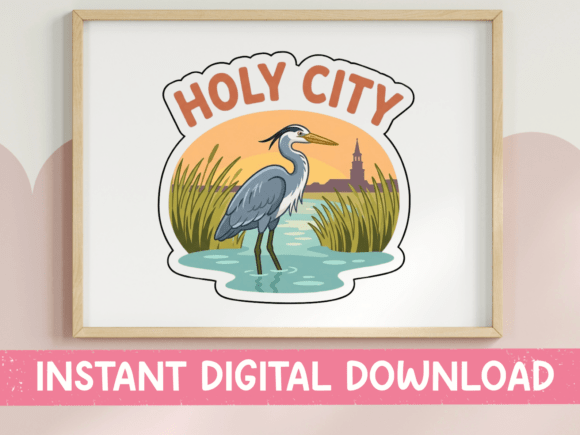
Holy City Great Blue Heron Sticker: A Designer's Review
As someone who spends more time staring at stitch maps than most people spend looking at actual art, I approach every new machine embroidery design with a mix of excitement and skepticism. We have all been there: you buy a beautiful digital embroidery file, load it onto your machine, and watch in horror as the satin stitches pucker or the fine details turn into a muddy mess. That is why I was particularly interested in putting the Holy City Great Blue Heron Sticker through its paces. This isn't just about whether it looks good on a screen; it is about whether it holds up as a finished product in the real world.
The first impression of this design is one of serene coastal nostalgia. The illustration style captures that specific Lowcountry mood—golden marsh reeds meeting shallow water with a tall, grey-blue heron standing guard. For those of us selling to Charleston lovers or wildlife fans, the theme is an instant hook. However, from a technical standpoint, the "sticker" aesthetic implies bold outlines and flat color fields, which can be tricky to translate into thread without losing that graphic punch. The layout feels balanced, with the heron acting as a strong vertical anchor amidst the horizontal flow of the reeds.
Real-World Application: The Tote Bag Test
To truly evaluate this embroidery project, I decided to skip the standard test swatch and go straight for a client-ready item: a heavy canvas tote bag. This is a popular product for Etsy sellers and boutique owners because it offers a large, stable surface area. My goal was to see if the Holy City Great Blue Heron Sticker could serve as a centerpiece for a small shop product line focused on coastal living.
When stitching onto canvas, fabric texture plays a huge role. The design relies on clean lines to maintain its illustrated look. I used a cut-away stabilizer to ensure the fabric didn't shift, which is crucial when dealing with the longer runs of the heron's legs and the reed details. The result was impressive. The fill stitch areas in the bird's body laid down smoothly, creating a solid block of color that mimicked the original graphic perfectly. The satin stitch borders, which define the "sticker" edge, popped nicely against the natural beige of the canvas. It transformed a simple bag into a high-value handmade product that feels professional rather than homemade.
Versatility Across Custom Apparel and Gifts
Beyond tote bags, I considered how this design fits into the broader category of T-Shirt Designs and Graphics. While the product listing categorizes it under graphics, its structure works surprisingly well for custom apparel. Imagine this embroidered on the left chest of a navy blue sweatshirt or the back yoke of a denim jacket. The grey-blue tones of the heron complement darker fabrics beautifully, offering a sophisticated alternative to bright, cartoonish wildlife designs.
For holiday embroidery or wedding gifts, this design shines in its subtlety. It is not overtly seasonal, which gives it longevity. A set of kitchen towels featuring this heron would make an excellent housewarming gift for anyone moving to the coast. However, when moving to stretchy fabrics like jersey knits for baby clothes, caution is required. The density of the stitch work needs to be monitored. If the stitch density is too high, the fabric will pucker, and the comfortable drape of a baby onesie will be ruined. In my assessment, this design is best suited for woven fabrics or stable knits where the structure can support the weight of the thread.
Technical Considerations and Potential Pitfalls
No design is perfect for every scenario, and honest reviews require pointing out where things might go wrong. The Holy City Great Blue Heron Sticker has intricate elements, specifically the thin reeds and the heron's beak. If you are attempting to scale this design down for a small hoop size, such as on a cap or a pocket, you risk losing these details. Tiny running stitch elements can easily break or disappear if the design is reduced below its recommended minimum size.
Furthermore, curved surfaces like baseball caps present a challenge. The flat, illustrative nature of the design fights against the curvature of a cap front. If you must use it here, ensure you are using a stiff backing and perhaps consider simplifying the background reeds to prevent registration issues. Similarly, on dark fabrics, you need to verify your thread colors. The original description mentions "golden marsh reeds," but if your gold thread lacks brightness, it will vanish against a black background. Always run a test on scrap fabric that matches your final product material.
Maximizing Value for Craft Businesses
For craft business owners and commercial embroidery professionals, the value of a design lies in its reliability and customer appeal. This design scores high on "giftability." It tells a story without needing words, making it perfect for tourists or locals wanting to display regional pride. When used in printable mockups for online listings, the distinct shape of the heron creates a recognizable silhouette that stops the scroll.
However, before listing this as a small shop product, you must do your due diligence. Check the licensing terms explicitly. Just because a file is purchased does not always grant commercial rights. Additionally, inspect the file for jump stitches that might need trimming in the final finished product. A clean backside is just as important as the front for building customer trust and ensuring durability through frequent washing.
In conclusion, the Holy City Great Blue Heron Sticker is a robust choice for designers looking to capture the essence of the Lowcountry. It bridges the gap between digital design assets and tactile embroidered patch aesthetics. Whether you are creating a personalized gift for a friend or stocking inventory for a beachside boutique, this design offers a professional look with a warm, inviting mood. Just remember to respect the limitations of your hoop size and fabric choice, and you will have a winner on your hands.