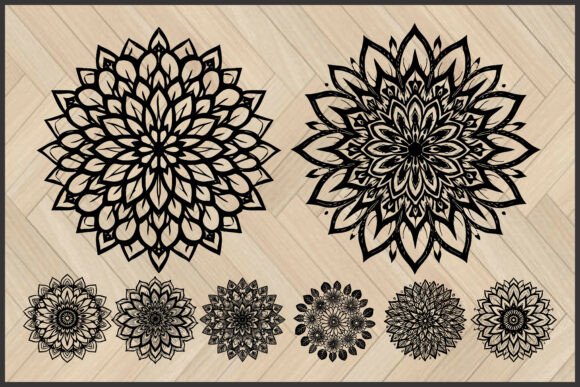
Black Line Art Mandala: A Designer's Real-World Review
When I first opened the folder for the Black Line Art Mandala bundle, my immediate reaction wasn't just about aesthetics; it was about utility. As someone who spends hours digitizing and stitching for clients, I look at every digital embroidery file through a lens of practicality. Will this hold up on a textured tote bag? Is the line weight sufficient for a small hoop? This collection of 31 floral mandala designs presents itself as a versatile asset for cutting, printing, and engraving, but today, I am evaluating it strictly for its potential in real-world embroidery projects.
The First Impression: Clean Lines and Versatile Mood
The visual personality of the Black Line Art Mandala set is strikingly modern yet rooted in traditional symmetry. The "black line art" description suggests high contrast, which translates beautifully to thread work. In an era where minimalism often clashes with the dense, heavy fills of traditional machine embroidery, these designs offer a breath of fresh air. They feel airy and deliberate.
For an Etsy seller or a boutique owner, the mood these graphics create is one of understated elegance. They don't scream for attention; they invite a closer look. This makes them perfect for brands that want to convey sophistication without being overly ornate. Whether you are aiming for a boho-chic vibe or a clean, contemporary look, the layout and detail level here provide a solid foundation. However, because these are originally marketed for cutting and printing, the transition to stitch requires a keen eye for how those lines translate into running stitch, satin stitch, or light fill stitch patterns.
Real-Life Application: The Custom Tote Bag Scenario
To truly test the viability of this bundle, I imagined a specific client request: a set of custom reusable shopping bags for a local farmer's market vendor. The client wanted something durable, washable, and visually distinct from the typical heavy-logo patches. This is where the Black Line Art Mandala shines.
Using one of the floral mandalas from the 31-design bundle, I visualized the finished product on a natural canvas tote bag design. The open spaces within the mandala allow the fabric texture to breathe, preventing that stiff, cardboard-like feel that often plagues large embroidered areas. For a handmade product intended for daily use, this is crucial. The design would likely perform best with a combination of fine running stitches for the outer details and perhaps a slightly denser fill for the central floral elements to create depth.
If I were producing this for a small shop product line, the consistency across the 31 variations would allow me to offer customers choices without compromising brand identity. One customer might want the intricate outer ring, while another prefers the bold center. This flexibility adds significant value to the craft business model, allowing for personalized touches that feel bespoke rather than mass-produced.
Navigating Fabric Challenges and Stitch Density
While the aesthetic appeal is undeniable, a professional reviewer must address the technical hurdles. The term "line art" implies thinness, and in embroidery, thin lines can be risky depending on the fabric texture. On a smooth, tight-weave cotton or a polished polyester blend, these designs will look crisp and professional. However, placing a delicate machine embroidery design on a fluffy towel or a coarse linen requires caution.
If you are attempting sweatshirt embroidery or working with stretchy knits, the stitch density becomes a critical factor. You must ensure that the digital file you are using has been optimized for fabric. If the lines are too close together, the fabric may pucker, distorting the perfect symmetry of the mandala. For baby embroidery projects, where softness is paramount, you would need to verify that the back of the stitching isn't too scratchy. Using a high-quality cut-away stabilizer is non-negotiable here to maintain the shape of the mandala after multiple washes.
Furthermore, curved surfaces like caps present a unique challenge. A large, circular mandala might not sit flat on the front panel of a baseball cap without significant distortion. In such cases, selecting a smaller, more compact version from the bundle or adjusting the hoop size placement is essential. Always test on scrap fabric first. What looks perfect on the screen can behave differently under the needle, especially when dealing with the fine details inherent in line art.
Commercial Viability and Brand Consistency
For commercial embroidery professionals, the value of a design lies in its reliability and its ability to enhance the perceived value of the custom apparel or item it adorns. The Black Line Art Mandala offers a level of intricacy that suggests high effort and skill, even if the actual stitch count is moderate. This perception boosts customer trust.
Imagine offering these as add-ons for holiday embroidery gifts or wedding favors. A pillow cover featuring a subtle, elegant mandala feels more luxurious than a generic block text design. It elevates the item from a simple craft to a piece of decor. For digital product sellers, these graphics serve as excellent design assets for creating printable mockups. Even if the end user isn't stitching them, the visual clarity of the black line art works wonderfully for sublimation transfers or heat press applications, broadening your market reach beyond just embroidery.
However, since this product is listed under Freebies and Graphics, there is a vital step before selling: licensing. Never assume a free download grants commercial rights. You must confirm the license terms explicitly. Can you sell the embroidered patch or the applique design made from this file? Can you resell the digitized file itself? Protecting your craft business means doing this due diligence upfront.
Practical Notes for the Serious Maker
Before committing to a production run, here are my top recommendations for working with this specific style:
- Thread Contrast: Since the design is "black line art," it naturally calls for black thread on light fabric. However, don't be afraid to experiment. A metallic gold or silver thread on navy blue could turn a standard personalized gift into a premium item.
- Detail Inspection: Zoom in on the smallest corners of the mandala. If the lines are too close, merge them or simplify the digitizing to prevent thread breaks and bird nests.
- Mockup Testing: Create both black-and-white and color mockups. See how the design holds up against different background colors before stitching.
- Wash Testing: If the final product is a kitchen towel or apron meant for frequent washing, ensure the thread colors are colorfast and the stabilizer is permanent.
- File Verification: The description mentions high resolution for printing and engraving. Ensure you have the correct embroidery file formats (like PES, DST, or EXP) compatible with your specific machine before starting.
In conclusion, the Black Line Art Mandala bundle is a promising resource for designers who appreciate clean, detailed aesthetics. It bridges the gap between digital graphic design and tactile textile art. With careful attention to fabric choice, stabilization, and licensing, these designs can become the cornerstone of a successful, stylish product line. They remind us that sometimes, the most impactful designs are the ones that rely on precision and simplicity rather than bulk and noise.